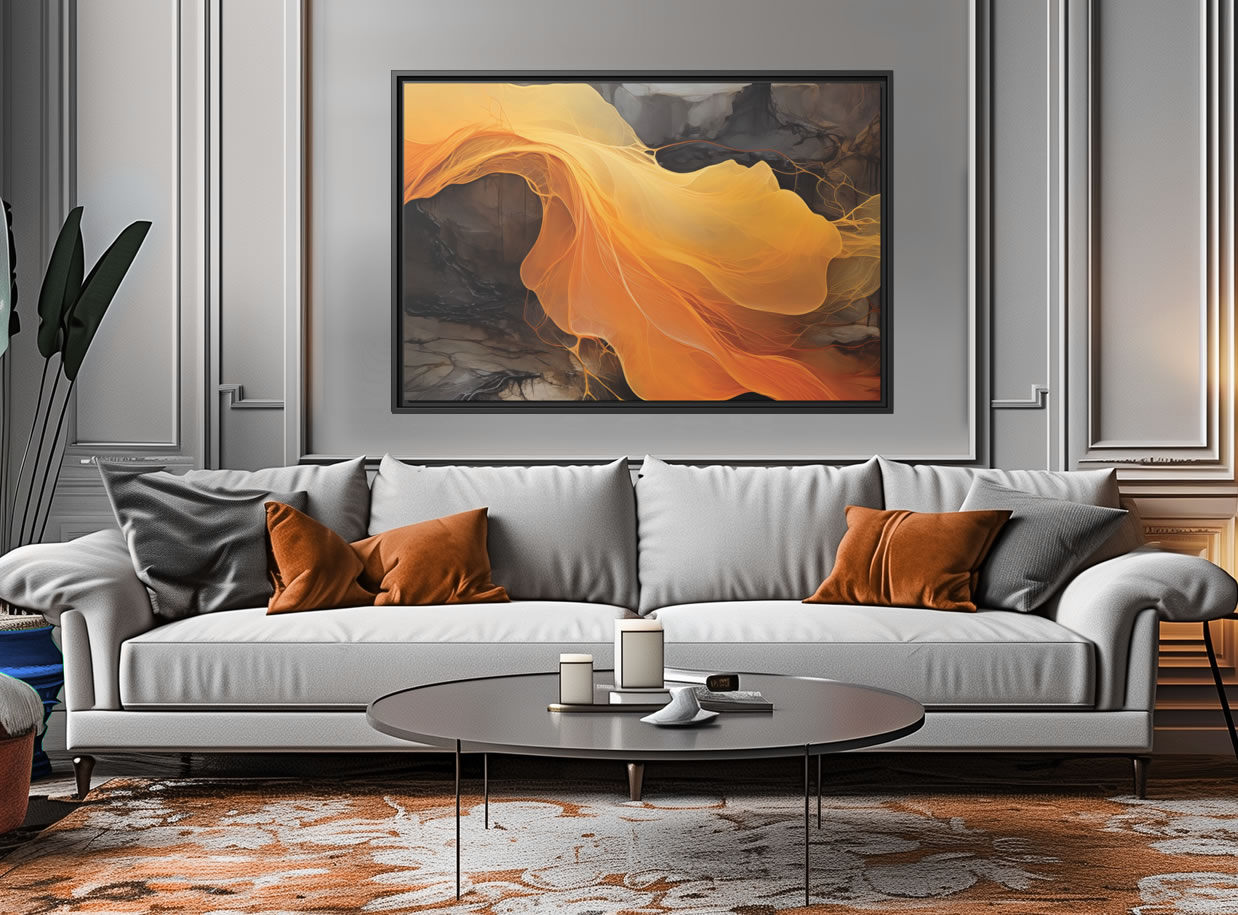


Soothing Space rolled Prints
DIY Rolled Paper Prints
We provide the artwork printed in perfect detail onto your choice of paper, it is cylinder rolled and delivered to you. Our artworks are easy to crop and fit because they are edge to edge colour. Thanks to rolled prints you can custom build your own framed artwork prints with your own frame and framing borders. Ideal for budget builds as well as recycling and updating your framed collections at minimal cost.
Choose between fine art (285gsm), semi-gloss (180gsm), or matte (200gsm), and bring your artwork to life in stunning detail.
DIY perfect fit for simple 50cm x 70cm frames (20″x30″)
Just choose either the portrait or landscape version 30″x20″ (76cm x 50.8cm) and trim the excess to match your frame mount.
DIY easy double canvas – making matching 50cm x 70cm(20″ x 30″) pair by cutting 100cm x 50cm (40″x28″) landscape print.
If you choose the larger size, it can be cut and divided into 2 portait artworks that you can turn into a matched pair. Simply divide the print in half using your frame backboard as the size template and insert it into your frame.
| 30″ x 20″ (Horizontal) Makes two 15″x 20″ (35cm x50cm) portrait prints. | 36″ x 24″ (Horizontal) Makes two 18″x 24″ (45cm x60cm) portrait prints. | 40″ x 28″ (Horizontal) Makes two 20″x28″ (50cm x70cm) portrait prints. | 20″ x 30″ (Vertical) | 24″ x 36″ (Vertical) | 28″ x 40″ (Vertical) | |
|---|---|---|---|---|---|---|
| Width, cm | 76.20 | 91.44 | 101.60 | 50.80 | 60.96 | 71.12 |
| Height, cm | 50.80 | 60.96 | 71.12 | 76.20 | 91.44 | 101.60 |
Part 1 – Choose Size, Artwork and Frame
Step 1 Choose an Artwork size for the space.
Choose a size artwork that will fit the space. see our sizing advice article to determine size
A rough idea of size can be anything from a piece of paper or cardboard to an artwork from another room. The objective is to decide on a dimension that works for the space.


Step 2 Choose your artwork and layout
Choose an artwork or artworks you would like to use. You should be focused on the content and feeI of the pieces. You may want to make pairs of prints, or smaller multiple artworks or combinations. We have a rough guide on how to choose artwork, but a little scouting or viewing some inspiring designer room photos can point us in the right direction. There are lots possible layout sizes and the the same proportions that work for canvas will translate to framed prints – the only limitation being that we will not be able to go as large with our prints and frame sizes. So in filling large spaces it may be more effective to use multiple framed prints.
TIP. Some designers are great at mixing different style framed prints and artworks to create a visual collage that is harmonised for the space. This can be done by using similar tones, colour, shapes and feels that all have a common feel or theme that creates interest or tells a story without over complicating the ensemble. You can experiment with the idea by laying a white sheet on the floor and putting your prints/frames/artworks in place to create organised displays of 4 elements or more. Then duplicate the art/frames with the same size cardboard/paper mockups and stick these temporarily on the desired wall with painters tape. This will give you the exact position of each element and allow you to adjust it perfectly to the space before you start adding nails/screws to hang your works.
Step 3 Choose a Frame
Choose a frame. I like frames that already have a border insert/mat/border cut included. Standard sizes like 50cm x 70cm (20″x28″) are very easy to find in homeware stores, supermarkets and discount stores. The quality can vary so be selective – I have bought some exceptionally well finished frames with clear acrylic instead of the glass, a card insert border and the frame in mdf wrapped wood finish that were done so well that it was hard to to tell them from real wood. The clear acrylic was wrapped on both inside and out, after peeling off the protection it was perfect and crystal clear. Thanks to the plastic the whole frame was also much lighter so easier to hang.
A frame supplied with a white card border that is the same size all around from the frame for me works best, it can be used in portrait and landscape orientation. Even if the border is not used it will allow us the option to position the print if we cut it too short or need to adjust the crop of the final artwork that is to be mounted. TIP Cutting a border is quite difficult and precision is required, any mistakes are easily seen, so its very useful to choose a frame and included border that is something you like rather than something that needs to be resized.
The objective of choosing the frame is to harmonise the frame with the art you have chosen and also the room we are decorating. We will need to choose colour, thickness and and finish of the frame.


Simple tips to help harmonise.
1. Try and match frame tones to surrounding elements – light coloured wood try and use light wood coloured frames. We don’t need to perfeclty match but tones or colours that resemble will look more cohesive. Also choosing frames thickness will help either lighten the feel, or make the artwork more dramatic.
2. Try to match the feel of the frame to the artwork. Light woods will give more airy, casual feel. darker woods can give a more formal and refined sense.
The good thing about frames is that once you have a frame size the print can be easily switched to new frame of the same size. This is great if you want to try the artwork in other styled frames and see test them in your space.


Some frame ideas and layouts


Part 2 – Build your Frame
Step1 Unroll your print
Our prints are shipped to you in a roll, so before getting them in a frame its good to flatten them out on a table and put some weights on them for a few days if you can. Once they are in the frame they will naturally flatten so if your print is slightly rounded its not a problem.
Step 2 Prepare your frame
Undo the back of the frame by carefully pulling up the tabs holding it. The back can now be removed, as well as the card border and the placement image(usually supplied with the frame). Use the frame backing plate or border cardboard as a template for positioning you artwork. You can now mark the outer edges of your print that will need to be cut in order to enter into the frame.
Step 3 Position and crop your image
If when positioning the print it is too small for the full size frame you can use the frame border cover any missing edges. Slide the print between the border plate and backing. Make sure the border and backing are perfectly aligned. The print can be adjust and excess removed if needed making sure that the border completely frames our print. We can now put a weight /book in the centre to hold the print in the final position, remove the carboard border. We can pencil the edge of the print. Then flip it and use some photo adhesive stickers / double side tape to stick the print to the placement image / backing. No need to overdo the stickers as the print will be sandwiched inside the frame. Any uneven , off centre edges, bad cuts will now be covered by the border card.
Step 3 Clean the glass remove protective film
Clean the inside glass avoiding to leave fingerprints dust etc . Clear polycarbonate/acrylic plastic is sometimes used to replace glass, so the protective film will need to be removed from both sides before we assemble everthing (also be careful of static as plastic can attract dust). This can be put into the frame again.
Step 4 Put the frame together
Avoiding to leave fingerprints dust etc .We can now put the cardboard border(if needed) in making sure the bevelled/face is facedown onto the glass. Then place the print/artwork in place face down onto the border(or direct onto the glass if no border was used).
TIP if you did not need your border just hide it behind your print before putting the backing plate in place. The border can be used on this frame again (or a frame the same size), write a note on the back panel like “white border behind print” in case you need to find it again.
Make sure all the tabs are out of the way and placing the backing plate in place, confirming the mounting support suit the orientation of the artwork. Holding all these together by hand we can quicky check everything is in place before bending down the tabs holding all the elements together.
Step 5 Final Check
We can do a final clean of external glass/clear acrylic. Check that the mounting orientation is correct. Verify the backing panel tabs are all down. Then its ready to hang your new framed print in place.
Designer Tips and Ideas!
Visit our Articles section to get useful insights to get the most out of our products. Its the ideal reference for anyone looking for a little help in choosing the right artwork to suit their project.